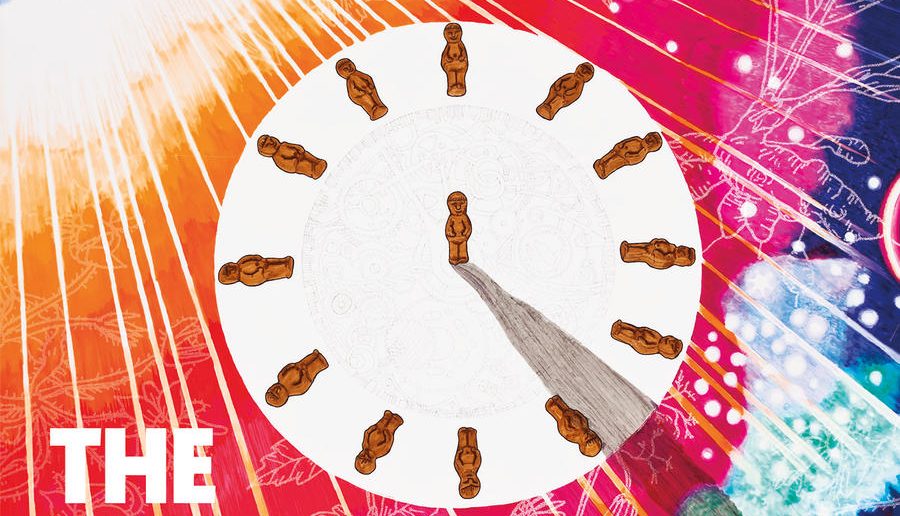
A review of The Future is Disabled: Prophecies, Love Notes, and Mournings Songs by Leah Lakshmi Piepzna-Samarasinha. Written in May 2023 in grad school for a portfolio course. Underneath the hoity-toity academic tone, be assured the book moved me and often to tears. It finally made me “come home” to my own dis/ability and neurodiversity, and was the first work of art to make me think that I have experiences worth sharing to the world, or at least recording for posterity.
If a book could be a friend, that is what The Future is Disabled has been to me. Please read it, read, and be free.
The Future is Disabled is not a book about a shiny techno-future with robot limbs and miracle cures. In fact, even if you are interested in the topic of accessibility, if you also understand disability as something to be prevented, the main theme of this book may come as a surprise. The author Leah Lakshmi Piepzna-Samarasinha, a disability justice activist from the USA, presents a radical vision of the future of surviving climate change, global pandemics, and political oppression through embracing disability, confronting externalized and internalized ableism, and learning from disabled skills and wisdom – in her words, “the technology of how to actually care” (p. 36). While it has little to say on how “disability” is socially constructed, it remains a heartfelt and compelling guide – from the often overlooked disabled perspective – for how to think of disability and how access is currently negotiated by disabled persons in the midst of isolating, often deeply ableist systems. I believe that this book highlights the need for, and is also a part of, a great diversity of knowledge on pathways to accessibility from the voices of the most vulnerable and excluded all over the world.
Piepzna-Samarasinha, who asserts her identity as a brown, queer, autistic, disabled nonbinary femme, opens the book with a narrative of how the COVID-19 pandemic response in the US betrayed a systematic disregard for the lives of disabled people, especially disabled people of color, who represented the most deaths from the Omicron variant in 2022. For readers with any kind of internalized ableism, she compels them (us?) to acknowledge the absurdity of the convention that the deaths and lives of immunocompromised or disabled people are less significant. It is here, from this crucial moment of attention, that she builds an argument for how disabled knowledge has been critical for adapting to the COVID-19 pandemic, and will become even more important as more people enter the spectrum of disability because of pandemics, the climate crisis, wars, and detention.
There is an intimacy to Piepzna-Samarasinha’s writing that drew me in. Although the book brings attention to over-arching structures that inhibit access, it always goes back to experiencing disability and co-creating care and access on a local, personal level, based on her own experiences within her community and groups of loved ones in varying states of dis/ability. The author explores and narrates instances of mutual aid and care networks as the means by which dis/abled communities can create real and lasting access for everyone. Some examples she gave were citizen science and information sharing brigades carried out by people (many of them disabled) on social media during the early weeks of the COVID pandemic, convincing people to mask months before it was recommended by the U.S. CDC. Other initiatives included members of the disabled community organizing drop-offs of masks, hand sanitizer, and food to other disabled, elderly, and immunocompromised people. The “Crip Fund” in her community in the first year of the pandemic was chiefly organized by PWDs, who raised money to give to disabled individuals in dire circumstances without gatekeeping of any kind. Through her many illustrations, it became clear to me that there is often a perspective in the field of development that views people with disabilities as passive recipients of care, and that this could lead to a “charity” model of support and access that would continue to disempower and marginalize PWDs. Supporting disabled leadership and organization (in the often more subtle forms that they practice), then, is crucial for creating truly sustainable and equitable forms of access and care.
On one hand, the centering of care and attention in the achievement of disability justice is the greatest strength of Piepzna-Samarasinha’s argument, and an aspect which I found to be lacking in conventional scholarly works on disability rights. It occurred to me while reading The Future is Disabled that the informal, loosely structured, and anecdotal nature of this book is a form of access that it creates. This book strives to establish rapport with our emotions, particularly for those of us who have negative experiences with ableism and rigidly enforced expectations of normalcy and productivity. As Piepzna-Samarasinha reminds the reader, it is not only those who can be categorized as “disabled” who can experience and be harmed by ableism. Having myself grown up with and cared for a family member with a disability, and having close friends with physical and psychosocial disabilities, I was often moved by her very personal stories about the tragic costs of disability exclusion, as well as the joys and victories achieved through collective action in her disabled communities.
On the other hand, the main critique that I have towards this writing is its lack of engagement with how disability is socially constructed. From my analysis Piepzna-Samarasinha adopts the minority model of disability throughout the book, which has been criticized by other disability thinkers. The minority model, as defined by Russell and Malhotra, asserts that the fundamental problem faced by disabled persons is the prejudice of an ableist society, through ignorance of their useful abilities. For the most part, these abilities were what Piepzna-Samarasinha referred to as disabled skills and ways of being, which are practices such as “masking, hand-washing, social distancing, long-term isolation, awareness of viruses and immune vulnerability,… adaptivity, and virtual community-building.” (p. 23) When this is taken together with the mostly binary portrayal of the disabled and the abled in this book, I think it is a shaky and essentialist claim to make, that these practices naturally and uniquely come from disabled people. It seems to imply that if (some) disabled people could not provide this special function, their marginalization would be justified. The book also does not address the issue of the nature of a society that “disables” people (or defines them as such). Piepzna-Samarasinha seems to readily accept the label of disability from society as correct and unproblematic. In this regard, I am inclined to disagree and align with another disability thinker, Marta Russell, who has asserted that disability is socially created, and presently stems from the exploitative economic structure and labor relations under capitalist society. Embracing disability as an identity validates this harmful, growth-centered logic and in my view would not work as a sustainable strategy for organizing society around access and inclusion.
While I found the lack of analysis on disability as a societal construct to be a surprising omission, Piepzna-Samarasinha does rationalize her stance by pointing towards the diversity of tactics that will be needed to create a better future for disabled and neurodivergent people. She advocates the belief that a system of oppression must be targeted with every means available, including working with current systems to make them more bearable for the currently vulnerable, and in ways that also actively involve disabled people in the ways they can organize and exercise political power. As differently abled and varied as people can be, there will be different strategies that are most apt for achieving sustainable, just, and decent lives for disabled people in a certain time period and political context. In this way, I can acknowledge the message of Piepzna-Samarasinha and find her body of work admirable. I hope that in the near future, many more voices from the perspective of disability, and from all around the world, will join this captivating chorus towards building a caring, accessible, and inclusive future for all.
References
Piepzna-Samarasinha, Leah Lakshmi. The Future is Disabled: Prophecies, Love Notes, and Mourning Songs. Arsenal Pulp Press, 2022.
Russell, Marta, and Ravi Malhotra. “Capitalism and Disability.” Socialist Register, vol. 38, no. 38, Routledge, Jan. 2002, socialistregister.com/index.php/srv/article/viewFile/5784/2680.

Leave a Reply